PERIOD: AFTER DECEMBER 16, 2015 — EXACT RESIDENCE YEARS STILL TO BE VERIFIED
OPENING
After my father died, life did not become still. It became geographic. I moved. First came Downtown Los Angeles. Later came Pacific Beach. Eventually, I returned to Oceanside. Those places belong to the same period of my life, but I do not want to force them into a cleaner calendar than the one I actually remember.
The sequence is established. The exact residence dates and durations are still TBD . I would rather leave an honest blank than manufacture precision. What I remember more clearly than dates is what movement meant. I was grieving. I was trying to build.
I was trying to become independent. I was trying to understand what the next version of my life was supposed to look like now that one of its permanent figures was gone. And for a while, changing the view felt like one way to keep going.
THIS CHAPTER OVERLAPS THE LAST ONE
Life does not organize itself as neatly as a website timeline. The mountains were becoming more important while the rest of my life was moving too. Cities changed. Relationships changed. Work changed. The amount of time I spent outside changed.
My sense of home changed. So this chapter overlaps The Mountains Became My Life . That is not a mistake in the chronology. It is the chronology. Grief, ambition, movement, technology, relationships, solitude, and the mountains were not waiting politely for one another to finish. They were happening together.
DOWNTOWN LOS ANGELES
After my father passed, I spent several years in Downtown Los Angeles. I was trying to launch my own business and get my career moving forward. Los Angeles made sense for that version of me. It was motion. Noise. Possibility.
People trying to become something. People pretending they already had. A city can make ambition feel physical. You see buildings reaching upward. Traffic moving in every direction. Windows lit long after dark.
People arriving with plans larger than their bank accounts and sometimes larger than reality. I understood that energy. I had plans too. I wanted to build. I wanted independence. I wanted a future that felt like mine.
Grief was still there, but Los Angeles did not ask me to sit quietly with it. The city kept moving. So I moved with it.
BUILDING WHILE GRIEVING
One of the strange things about loss is that the world does not stop because somebody important to you died. Bills still arrive. Ideas still show up. Work still has to be done. People still ask what you are doing next. I was trying to build a future while carrying a past that had just become permanent.
My relationship with my father had never been simple. His death did not make it simple. It only removed the possibility of another conversation. There are things you can resolve with a living person. There are other things you have to resolve inside yourself because the person is no longer there to answer. That work can follow you anywhere.
Even into a new city.
PACIFIC BEACH
Later, I moved south and spent years living in Pacific Beach. [EXACT YEARS / DURATION TBD] I was in a relationship during that period, and life took on a different rhythm. Los Angeles had been vertical—buildings, ambition, traffic, upward motion. Pacific Beach felt more horizontal. Ocean.
Sky. Distance. A horizon that did not care what I was trying to prove. The change of environment mattered. But no place, no matter how beautiful, can do all of the internal work for you. A new address can give you distance.
It cannot automatically give you peace. That lesson took longer to understand.
THE MOUNTAINS WERE BECOMING ANOTHER HOME
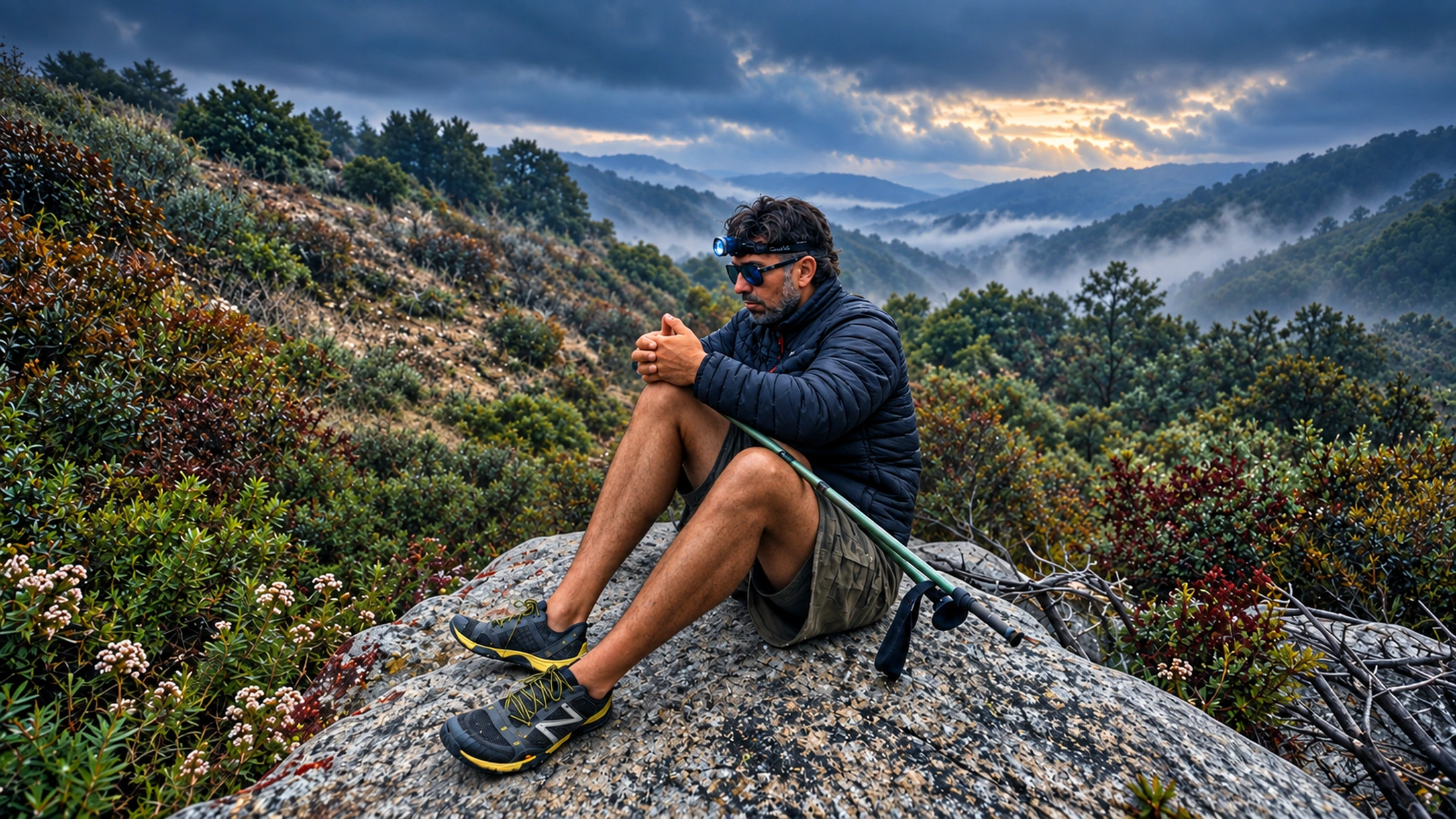
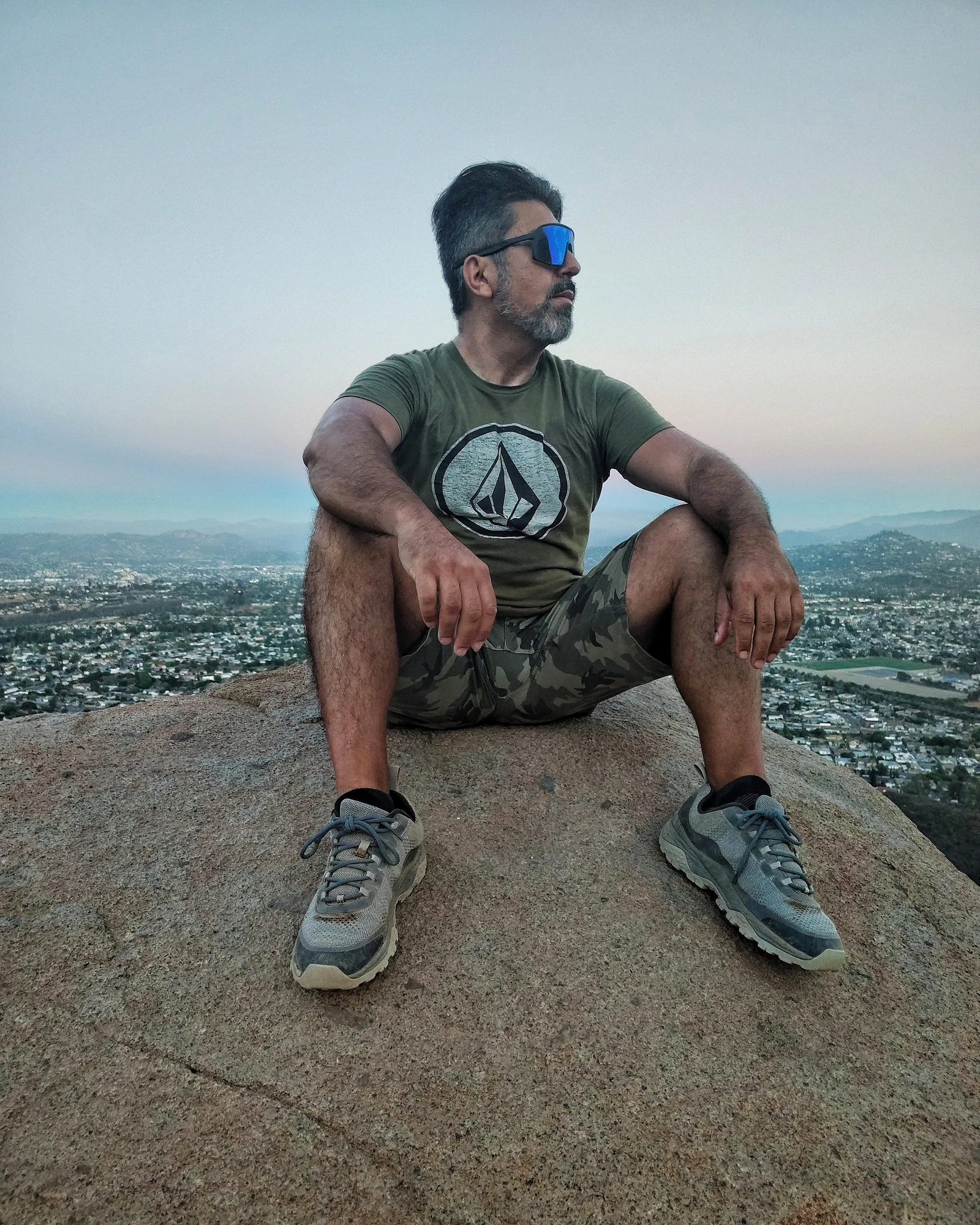
During these years, the mountains became increasingly central to my life. I hiked. I climbed. I trained. I spent long stretches outside. I traveled to mountains beyond the immediate places I knew growing up.
The mountains became somewhere I could find solitude and structure when the rest of life felt less predictable. That part of the story belongs more fully to Chapter 03 and the Loco Hiker world. But it matters here because the mountains were not separate from the moves. They were part of what I carried between them. The city could change. The coast could change.
The address could change. The need to walk remained.
THE WORK NEVER COMPLETELY DISAPPEARED
Even when I stepped deeper into hiking, climbing, camping, and exploration, technology never disappeared from my life. I kept learning. I kept studying. I kept writing. I kept building ideas privately, sometimes long before they had a public name attached to them. My career did not move in a clean straight line.
Neither did the rest of my life. I have learned not to confuse a straight line with a meaningful one. Some of the most important things I have built began during periods that, from the outside, might have looked like detours.
THE RETURN TO OCEANSIDE
Eventually, I returned to Oceanside. The exact move date remains TBD . Returning to a familiar place did not mean returning as the same person. Too much had happened. My father was gone. I had lived in Los Angeles.
I had lived in Pacific Beach. The mountains had become part of my identity. I had tested different versions of independence. I had built things. Lost things. Started again.
Home is a strange word after enough years away. Sometimes you return to the geography of your past and discover that the person returning no longer fits inside the old map. The streets can be familiar while the life feels completely different.
WHAT MOVEMENT CAN AND CANNOT DO
I believe movement matters. A different environment can wake up parts of you that have gone quiet. A new city can challenge old assumptions. Distance can reveal patterns that were harder to see when you were standing inside them. But movement has limits. You can change your address without changing your wounds.
You can move toward opportunity without moving away from grief. You can stand beside an ocean and still carry something heavy. You can climb a mountain and still have work waiting inside you when you come back down. Eventually, I had to understand that geography could support change. It could not replace it.
WHAT IT CHANGED IN ME
Those years taught me that identity is not tied to one place. I could leave. I could rebuild routines. I could begin again in a different environment. I could become more independent. I could carry skills, ambition, faith, curiosity, grief, and unfinished questions from one chapter into another.
But they also taught me something less romantic: wherever I went, I still arrived with myself. That sounds obvious now. It was not always obvious then.
LOOKING BACK
When I look back on Downtown Los Angeles, Pacific Beach, and the eventual return to Oceanside, I do not see three disconnected addresses. I see movement after loss. I see a man trying to keep building while his internal map was changing. I see ambition. Relationship. Solitude.
Technology. Mountains. Ocean. The desire to become independent. The desire to understand where I belonged. And I see something else now:
I was not only moving between places. I was moving between versions of myself. None of them had the complete answer. Each one carried something forward.
ARCHIVE
[TBD — photographs from the Downtown Los Angeles years] [TBD — photographs from Pacific Beach that can be dated accurately] [TBD — early photographs connected to the return to Oceanside] [TBD — business / technology material from the Los Angeles period] [TBD — journals, writing, or documents that accurately establish residence chronology] [TBD — mountain photographs that can be tied confidently to this transition period]
No photograph should be assigned to a city or year unless the location and period can be verified.
THE LINE I CARRIED FORWARD
I kept changing the view because I was still learning how to understand the man looking out from it.