PERIOD: 2015 ONWARD — EXACT START DATE STILL TO BE VERIFIED
OPENING
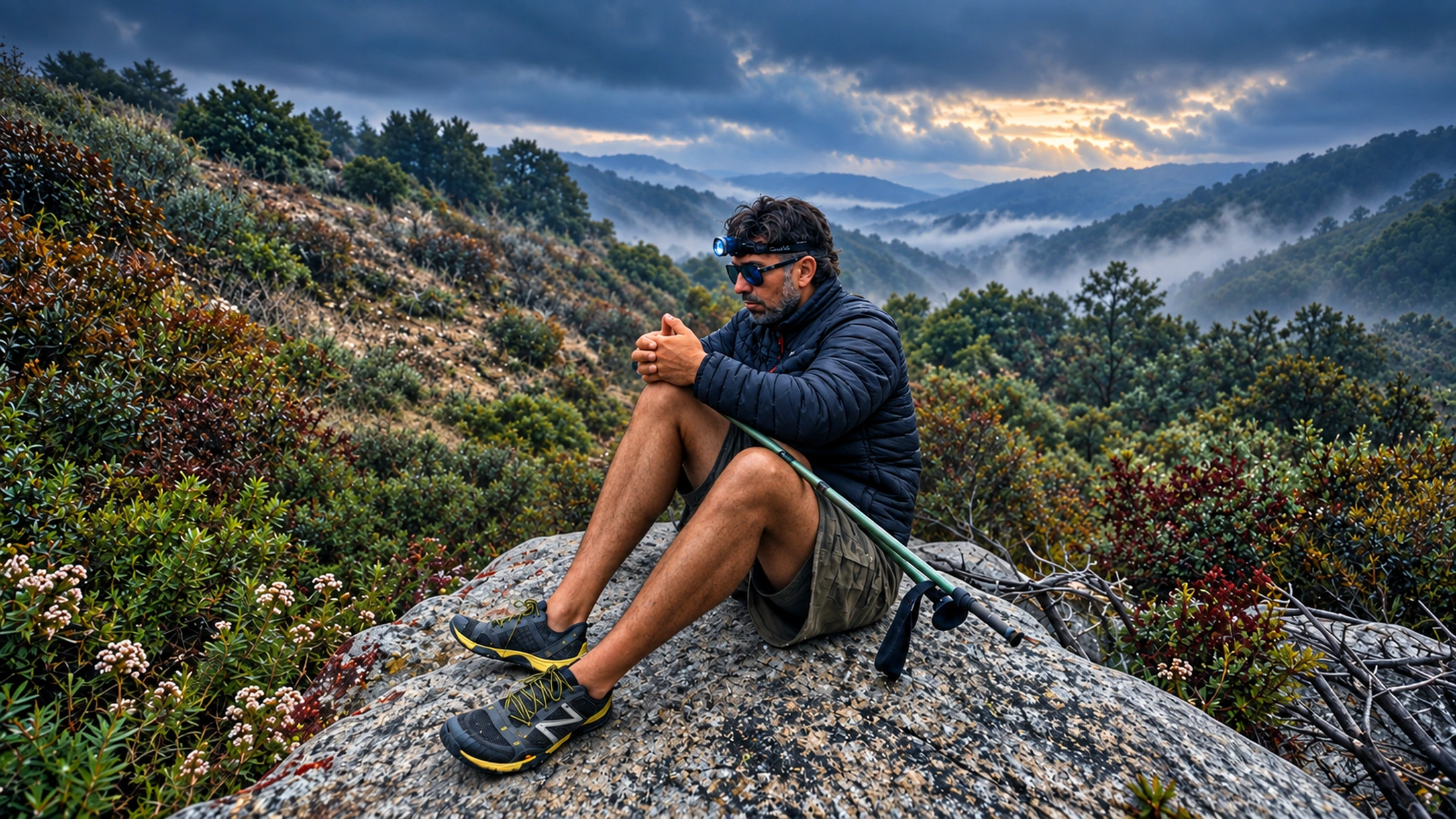
After my father died, I kept moving. Somewhere along the way, the mountains stopped being scenery and became part of my life. I wish I could point to one morning and say: That was the day it began. But the truth is less convenient and more honest. There was no ceremony. No single summit.
No photograph that captured the exact second when hiking became something deeper. There was grief. There was movement. There was the need to get outside. And then there were the mountains, waiting without asking me to explain myself. I went back.
Then I went back again. And again. Until returning became a way of living.
NO CLEAN STARTING LINE
The exact calendar date when this changed is still TBD . I will not invent one simply because a timeline looks cleaner with a number beside it. What I can say is that after my father's death, and through the years that followed, the mountains became increasingly central to my life. At first, movement was enough. Put on the shoes. Find the trail.
Start walking. Climb until the noise changes. There is something honest about elevation. You cannot argue a hill flatter. You cannot negotiate gravity into giving you an easier day. The trail asks a question with every step:
Are you going to keep going? For a long time, that was a question I knew how to answer.
THE REPETITION
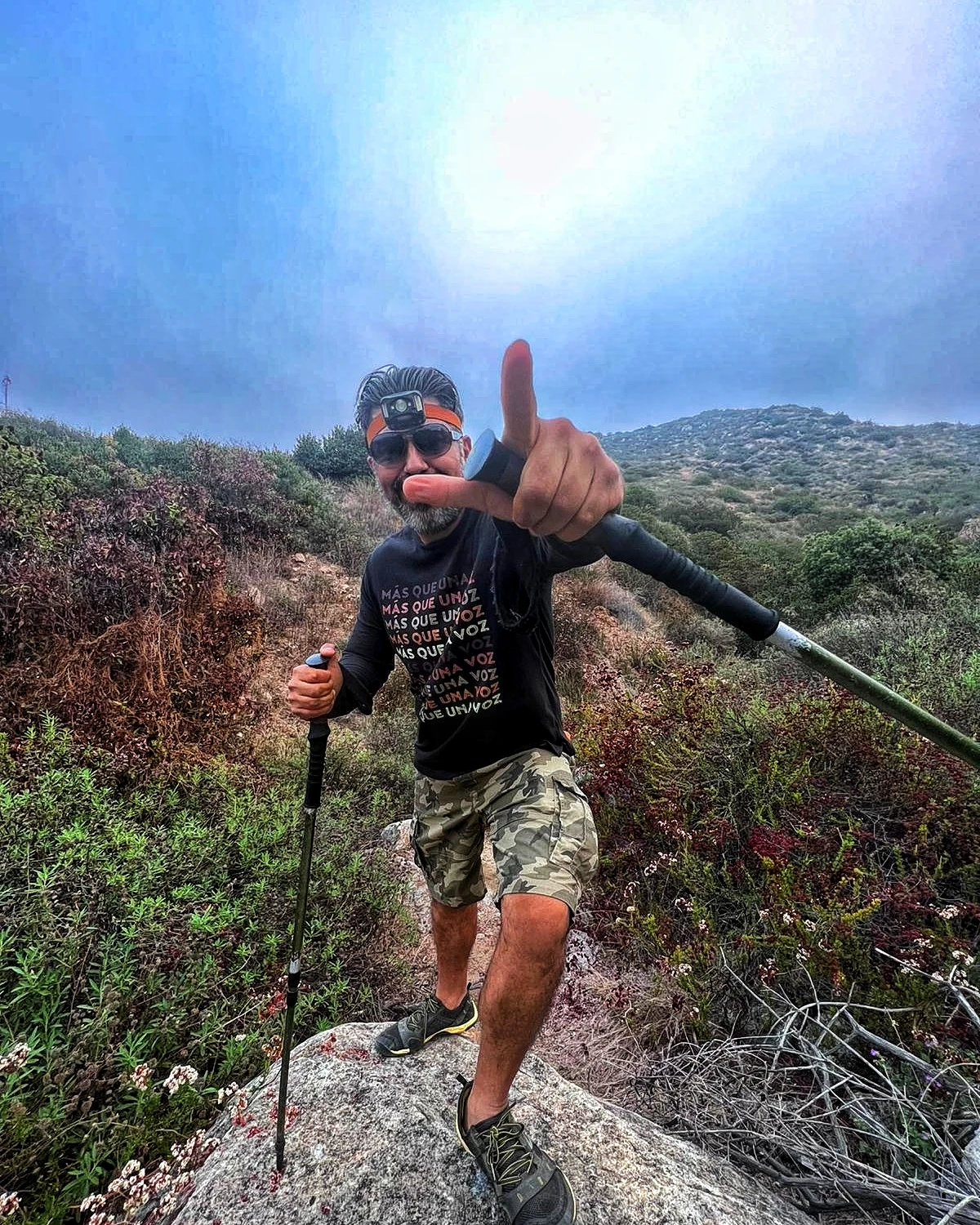
Eventually I was no longer hiking occasionally. For more than five years, I hiked and climbed Southern California mountains almost every day. The repetition changed the relationship. A trail visited once is an experience. A mountain returned to again and again becomes something closer to a teacher. You begin noticing what casual visits miss.
How the same ridge feels different under another sky. How the body changes when climbing stops being unusual. How confidence can help you—and how quickly it can become dangerous if it outruns judgment. How weather, fatigue, preparation, hydration, distance, darkness, heat, cold, and terrain all have a vote. The mountains were teaching me preparation before I ever called it training. They were teaching me humility before I understood how much I would eventually need it.
FOUR HUNDRED DAYS
At one point, I climbed a peak for 400 consecutive days without taking a day off . There were days when I was tired. Days when I did not feel good. Days when I was sick or running a fever. And still I went. I do not write that as a recommendation.
I write it because it shows how completely the mountains had entered my life. What had once been something I did had become part of how I measured a day. Get up. Move. Climb. Come back.
Do it again. Discipline can build you. It can also test whether you know when discipline has crossed into obsession. That distinction would become more important later. At the time, I mostly understood one thing: I kept showing up.
DISTANCE CHANGES YOU
Over the years, the miles accumulated. Tens of thousands of them. Countless trails. Dozens of mountains across this continent. Some days were ordinary. Some were beautiful.
Some hurt. Some scared me. I got lost. I got injured. There were moments when the margin between a difficult day and something far worse felt very thin. And still, the mountains kept drawing me back.
Not because they were easy. Because they were honest. A mountain does not care what title I have. It does not care what I built, what I lost, what somebody thinks of me, or what I think of myself. Out there, performance becomes physical. Did I prepare?
Did I bring what I needed? Did I read the terrain correctly? Did I respect the conditions? Can I keep moving without becoming reckless? The answer arrives in the body.
WHEN THE BODY BECAME A COMPASS
I learned to read myself differently outside. Breathing. Legs. Heat. Fatigue. Pain.
Pace. Distance. The point where discomfort is simply discomfort. The point where something has changed and attention is required. The mountains made me more aware of the difference between wanting to stop and needing to stop. Those are not always the same thing.
They also taught me that strength is not the absence of limits. Real strength requires knowing that limits exist.
WHAT I FOUND UP THERE
People sometimes talk about mountains as escape. For me, that word has never been enough. The mountains did not erase what hurt. They did not rewrite my childhood. They did not bring my father back. They did not solve every problem waiting below.
What they gave me was somewhere the noise could become quieter. Somewhere effort made sense. Somewhere I could walk long enough for thoughts to separate from each other. Somewhere I could pray. Somewhere I could be angry without having to explain the anger. Somewhere I could feel small without feeling insignificant.
That difference matters. Standing beneath something larger than me did not reduce me. It put me back into scale.
THE TRAIL, NOT JUST THE SUMMIT
Over time, I stopped believing the summit was the whole point. The summit is brief. The trail is where most of the life happens. The trail is where the legs burn. Where doubt starts talking. Where weather changes.
Where plans get revised. Where you learn whether you prepared honestly. Where you decide whether to continue, turn around, wait, or adapt. The summit can give you a photograph. The trail gives you information about yourself. That is what kept pulling me back.
WHEN HIKING BECAME TRAINING
Eventually the scale changed again. Hiking became climbing. Climbing became rock climbing. Camping became longer stretches in the mountains. Ordinary days became training days. The distances grew.
The pack became part of the work. Preparation became more deliberate. And eventually I began training for years toward an attempt on Mount Everest . That belongs to another chapter. So does the fall that later changed the plan. But the Everest years did not begin with Everest.
They began much earlier, with the simple act of returning to the mountains until returning was no longer unusual. The extraordinary goal grew out of ordinary repetition. One trail. One climb. One day. Then another.
WHAT IT CHANGED IN ME
The mountains gave structure to a part of my life that needed structure. They made endurance physical. They made preparation visible. They made humility unavoidable. They showed me that fear can exist beside forward motion. They taught me that turning around can sometimes require more judgment than continuing.
They taught me that nature is not impressed by confidence. And they gave me a place where discipline could become something more than an idea. I carried those lessons back down with me. Into work. Into grief. Into faith.
Into the way I approached problems. Into the man I was becoming.
LOOKING BACK
Today, I can see a line between the child who grew up around the San Luis Rey River and the man who would later spend years climbing mountains. The line was not straight. Life interrupted it many times. But it was there. The kid who liked being outside became the man who needed long miles. The local hills became bigger mountains.
Walking became training. Training became identity. And somewhere in that transformation, a name began forming around the life I was already living. Loco Hiker would come later. But the life came first. That matters to me.
Because the name did not create the mountains. The mountains created the conditions in which the name could eventually make sense.
ARCHIVE
[TBD — earliest photographs from the period when hiking became near-daily] [TBD — photographs from the 400-day consecutive peak streak] [TBD — early mountain-camping photographs] [TBD — climbing / rock-climbing photographs] [TBD — training-pack photographs] [TBD — journals, route notes, gear, or records that accurately document the period]
Only material that can be tied honestly to the period should be labeled as historical documentation.
THE LINE I CARRIED FORWARD
I went to the mountains looking for movement. Somewhere along the way, they became a way of life.