
DATE: DECEMBER 16, 2015
OPENING
On December 16, 2015, my father died. There are losses that divide a life into before and after. This was one of mine. The difficult thing about losing my father is that grief did not arrive with a clean story. It did not erase the bars. It did not erase the drinking.
It did not erase the nights when I was a child inside an adult world, or the rides home when I should never have been inside that car. Death did not reach backward and make any of that disappear. But it did not erase the fact that he was my father either. So when he died, I did not lose a simple man. I lost somebody whose presence had shaped me in ways both painful and permanent.
And grief made me carry all of those truths at the same time.
BEFORE THE DIAGNOSIS
Before my father's cancer diagnosis, my business was doing well. I was moving. Building. Working. Looking ahead. My attention was pointed toward the future.
Then the diagnosis changed the meaning of time. We were told he had perhaps two or three years to live. A sentence like that rearranges priorities quickly. The business that had mattered so much to me no longer felt like the most important thing in the room. My father became the priority. Not because our history had suddenly become simple.
Not because the past had been repaired. Because time had become finite in a way I could no longer ignore.
WHEN THE CLOCK CHANGED
Before illness enters a family, time can feel almost invisible. You assume there will be another week. Another conversation. Another chance to deal with whatever has been left unresolved. A serious diagnosis takes that illusion away. Suddenly time has weight.
A day is no longer just a day. A year is no longer an abstract distance on a calendar. The future begins to feel counted. That changed me before my father ever died. I began living with the knowledge that there might be an ending ahead of us, even though I did not know exactly when it would come. And once you know that, ordinary life does not feel entirely ordinary anymore.
THE MAN I LOST
My relationship with my father cannot be reduced to one word. He was not only the father I lost. He was also the father whose choices had frightened me when I was a child. The man who drank. The man who took me into places I should never have been. The man whose intoxicated driving put my life in danger.
Those things are true. They remain true after death. But another truth remained too: he was my father. That matters. Grief does not require me to turn him into a saint.
And telling the truth about my childhood does not require me to pretend his death meant nothing. Human relationships are sometimes more complicated than the stories we want to tell about them. Love can live beside anger. Loyalty can live beside disappointment. Memory can hold tenderness and fear without asking one to cancel the other. Losing my father forced me to understand that complexity in a way I had never wanted to learn.
DECEMBER 16, 2015
Then the date arrived. December 16, 2015. My father died. There are moments when language feels too small for what happens. You can write the date. You can say the words.
You can explain that somebody is gone. But the mind does not immediately understand what permanence means. A person can occupy your life for years and then, suddenly, every future conversation with them exists only in imagination. There is no next phone call. No next argument. No next opportunity to say the thing you should have said earlier.
No chance to ask one more question. No chance to rewrite what already happened. The story becomes fixed. That may be one of the hardest things about death. Not only that somebody leaves. But that the unfinished parts of the relationship stay behind.
GRIEF DOES NOT EDIT
For a while, I think I expected grief to make the story clearer. It did not. Death did not edit my childhood into something easier to understand. It did not transform danger into protection. It did not turn silence into defense. It did not erase anger.
But grief also refused to let me reduce my father to the worst things he had done. I had to hold the whole man in memory. The contradictions. The damage. The history. The fact that I had spent part of my life trying not to become like him.
And the fact that losing him still hurt. That is a difficult kind of grief because there is no clean emotion to hide inside. You can miss somebody and still be angry with them. You can mourn somebody and still tell the truth about what happened. You can wish parts of the relationship had been different and still wish the person were here. All of those things can exist in the same heart.
WHAT DEATH CHANGED
His death changed the direction of my life. I cannot reduce everything that followed to one event, because life does not work that cleanly. But I know there was a version of me before December 16, 2015, and another version after it. The future I had been building no longer felt arranged the same way. Priorities shifted. My relationship with time shifted.
The way I thought about family shifted. The way I thought about what can disappear shifted. When someone dies, the world around you keeps moving with almost insulting normality. Traffic still moves. People still go to work. Stores still open.
Phones still ring. The sun still comes up. And yet the architecture of your own world has changed. That contrast stays with me.
THE ROAD AFTER
What followed would become another chapter of its own. Downtown Los Angeles. Pacific Beach. Eventually Oceanside. Movement. Different places.
Different versions of myself. The exact calendar years of those moves still need to be verified before I publish them as a formal chronology. But the sequence matters. After my father, I moved through life differently. And somewhere in those years, the mountains began becoming more than scenery. They became somewhere I returned to.
Somewhere I could move until the noise changed. Somewhere effort made sense. That story comes next.
LOOKING BACK
I do not write this chapter to make my father better than he was. I do not write it to make him worse either. I write it because he was real. Our history was real. The damage was real. The bond was real.
And the loss was real. I have learned that honesty does not require choosing between love and truth. Sometimes honesty means refusing to choose. It means saying: This hurt me. And also:
I still lost someone who mattered to me. Both belong in the story. Both shaped the man who came after. December 16, 2015 did not resolve my relationship with my father. It made that relationship permanent in memory. And from that point forward, whatever I needed to understand, forgive, reject, carry, or become would have to happen without him here.
ARCHIVE
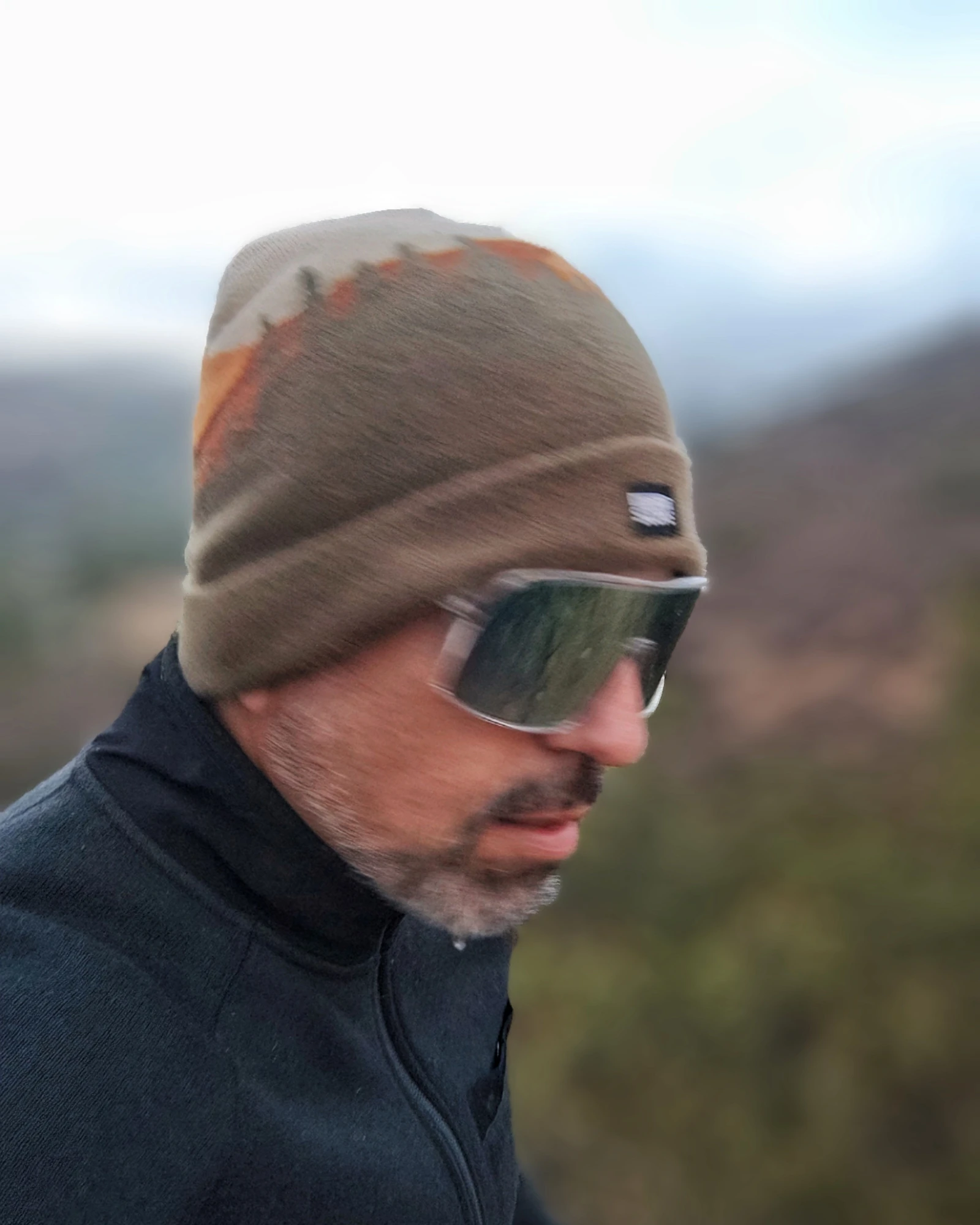
[TBD — authentic photographs of my father] [TBD — photographs of us together, if available and date/context can be verified] [TBD — family photographs from the cancer-diagnosis period] [TBD — documents or personal artifacts connected to this period, if appropriate for public display] Any present-day photograph used with this chapter must be identified as editorial imagery rather than documentation from 2015. Nothing should be staged or presented as a historical image of my father's final days.
THE LINE I CARRIED FORWARD
Death did not make our story simple. It made it permanent.