PERIOD: THE YEARS AFTER THE FALL · EXACT REHABILITATION DATES TBD
OPENING
I had spent years teaching myself to go farther. Recovery taught me how to respect an inch. The fall itself lasted seconds. The way back did not. Afterward, there was no clean transition from injured to healed. There was no morning when I woke up and the old body had simply returned. My back had been hurt.
Both shoulders had been hurt. My knees had been hurt. And the body I had trained for years to trust suddenly required a different kind of attention. Not ambition. Not punishment. Not another test of how much discomfort I could ignore.
Attention. Patience. Time.
The mountain had taught me how to push. Recovery had to teach me when pushing was the wrong answer.
AFTER THE EVENT
Before the fall, my physical life had been built around movement. Long days. Loaded packs. Climbing. Camping. Distance.
Repetition. A body trained to expect another mile, another ascent, another day outside. After the fall, that relationship changed. The body was no longer simply the vehicle carrying me toward an objective. It had become part of the objective. I had to live inside what had changed before I could decide what came next.
That was difficult for me because I already knew what I had been capable of. Memory can make recovery cruel. You remember the version of yourself who could do more. You remember how ordinary certain movements once felt. You remember what did not require negotiation. Then you meet the same movement again and realize the terms have changed.
THE BODY I REMEMBERED
One of the hardest parts of rehabilitation was not simply pain or limitation. It was comparison. I knew the body that had trained for Everest. I knew the legs that had carried me through long days. I knew the shoulders that had carried weight. I knew the back I had expected to keep supporting the next objective.
Recovery forced me to stop measuring the present only against the strongest version of the past. That sounds simple when written in one sentence. It was not simple to live. When your identity has become tied to movement, changed capacity can feel personal. A limitation can start sounding like a verdict. A slow day can feel like failure.
A setback can feel like proof that you are never getting back. I had to learn not to believe every conclusion frustration offered me.
RECOVERY IS NOT A SUMMIT
Mountains had trained me to understand goals. There is a route. There is distance. There is elevation. There is a point you are trying to reach. Recovery did not respect that structure.
There was no visible summit. No clean line on a map. No guarantee that effort today would produce an obvious result tomorrow. The old mountain logic—work harder, go farther, carry more—could not simply be copied into rehabilitation. Healing was not another endurance contest. Sometimes more effort was useful.
Sometimes patience was the work. Sometimes restraint was the work. Sometimes accepting that the day was smaller than I wanted it to be was the work.
THE REHABILITATION YEARS
I describe this period as years of rehabilitation because that is what it became. Years. Not a motivational montage. Not a few difficult weeks followed by a triumphant return. Years of living with the consequences of the fall while trying to regain function, movement, confidence, and some relationship with the physical life I had known before. I am intentionally not publishing a reconstructed treatment calendar here.
I do not have a verified public record in this chapter that supports a month-by-month medical timeline. So I will not invent one. What I can say truthfully is that recovery became part of my life for a long time. Long enough that patience stopped being an abstract virtue and became something practical. Long enough that I had to stop asking only, How fast can I come back? And start asking, What does my body actually allow today?
PATIENCE WAS ITS OWN DISCIPLINE
I had always respected discipline. But for years, I associated discipline with doing more. Wake up. Go. Train. Climb.
Repeat. Recovery introduced another form of discipline. Waiting without quitting. Adjusting without surrendering. Doing less when less was the responsible choice. Coming back to the work after a discouraging day.
Refusing to turn one bad stretch into a permanent conclusion. That version of discipline does not photograph as well. There is no summit flag for patience. Nobody applauds the invisible decisions that keep a person from giving up on a body that is moving slower than the mind wants. But those decisions matter.
FRUSTRATION
I would like to make recovery sound noble from beginning to end. It was not. There was frustration. There were days when the distance between what I remembered and what I could do felt enormous. There were moments when patience felt less like wisdom and more like being trapped inside time. There was the Everest objective sitting in the background of all of it—the reminder of what the training had once been pointed toward.
There was the simple human irritation of wanting the body to cooperate because the mind had already decided what it wanted. Recovery does not care about that agreement. The mind can vote yes. The body can still vote no. And when those votes disagree, reality wins.
Progress could be real without being continuous. A difficult day did not erase every good day that came before it, and a strong day did not mean the work was finished.
SMALL GAINS
Eventually, I had to change the unit of measurement. Before the fall, I could think in miles. Hours. Elevation. Weight carried. Objectives completed.
Recovery asked for smaller measurements. A movement that felt more possible. A little more confidence. A day that felt less limited than another day had felt. The ability to do something without immediately turning it into a test of everything I used to be. These gains can look unimpressive from the outside.
Inside a recovery, they can mean everything. I learned that a small improvement is not small when you had to fight for it.
SETBACKS COUNT TOO
The word recovery can sound as if every week moves upward. Mine did not belong to that kind of story. There were better periods and harder periods. There were days when movement felt encouraging and days when the body reminded me that improvement was not the same as completion. I had to stop treating every setback as betrayal. The body was not betraying me by having limits.
It was communicating. That was a difficult shift because I had spent years training myself to push through discomfort. Now I had to learn that not every signal is an obstacle to conquer. Some signals are information. The mountain had taught me to listen to weather. Recovery taught me to listen inward with the same seriousness.
RETURNING TO MOVEMENT
At some point, movement stopped being only something I missed and became something I could begin rebuilding a relationship with. Not all at once. Not at the old scale. Not with the assumption that one return meant the recovery was finished. I had to approach movement differently. Less as proof.
More as conversation. What can I do today? How does the body answer? What needs to change? What can wait? That is a humbler way to move.
It is also a more sustainable one. I had spent years learning how to ask more of myself. Now I was learning how to hear the answer.
RETURNING TO THE MOUNTAINS
The mountains never stopped mattering to me. That may be the most important thing to understand about the return. The fall changed my relationship with the mountains. It did not erase the relationship. Eventually, I returned. But returning did not mean pretending nothing had happened.
It did not mean restarting the Everest plan at the exact point where it stopped. It did not mean proving the accident had failed to affect me. Returning meant walking back into a world I still loved while carrying the knowledge of how quickly that world can change. It meant bringing the injured version of myself with me instead of demanding that he disappear first. It meant understanding that a mountain could still give me joy even if I was no longer using every climb as preparation for the biggest possible objective.
I did not return to the mountains because I had become the old version of myself again. I returned because the mountains still belonged in the life I was becoming.
DIFFERENT DOES NOT MEAN FINISHED
There is a temptation in recovery stories to search for the old self. To make the ending about getting everything back. I do not want to write that story if it is not true. The fall changed things. Years of rehabilitation changed things. The body I returned with carried history the body before the fall did not carry.
That does not make the returned version lesser. It makes him informed. More cautious in some ways. More patient in some ways. More aware that capacity can change. More aware that movement is something to value rather than assume.
I do not need to claim a perfect restoration for the recovery to matter. The fact that I could return at all was meaningful.
WHAT I WILL NOT INVENT
The documentary limits of this chapter are important. The exact rehabilitation start and end dates remain TBD . I am not publishing a diagnosis list that I cannot support here with records. I am not inventing the names or sequence of therapies, procedures, medications, providers, or rehabilitation programs. I am not assigning numerical pain scores, range-of-motion measurements, strength percentages, or medical milestones from memory. I am not claiming that recovery was complete on a specific date.
I am not claiming that returning to the mountains meant every injury had resolved. I am not identifying the mountain where the fall occurred. And I am not going to manufacture a dramatic first-return scene simply because a single cinematic moment would make the chapter easier to package. The return was larger than one moment. It was a process. The truth does not need cleaner edges than the life had.
THE LONG WAY BACK
For a long time, I thought strength meant continuing forward no matter what. Recovery complicated that definition. Sometimes strength meant stopping. Sometimes it meant trying again. Sometimes it meant accepting a smaller day. Sometimes it meant refusing to let a smaller day convince me I had become a smaller person.
That distinction mattered. The body could be limited without the life being over. The objective could change without every year of preparation becoming meaningless. The mountain could remain beautiful even after one of the hardest things in my life happened on one. And progress could be real even when it refused to move in a straight line.
LOOKING BACK
When I think about the years after the fall, I do not see one triumphant comeback. I see repetition. Adjustment. Frustration. Waiting. Trying.
Backing off. Trying again. Learning how to recognize progress before it looked impressive. Learning how to live inside a body without treating it like equipment I owned. Learning that recovery is not an argument you win against yourself. It is a relationship you rebuild.
The man who trained for Everest wanted to become strong enough to stand at the top of the world. The man coming back from the fall had to learn something quieter: How to keep a life moving when the original map no longer applied. That journey did not have one summit. It had thousands of small decisions. And eventually, enough of those decisions led me outside again.
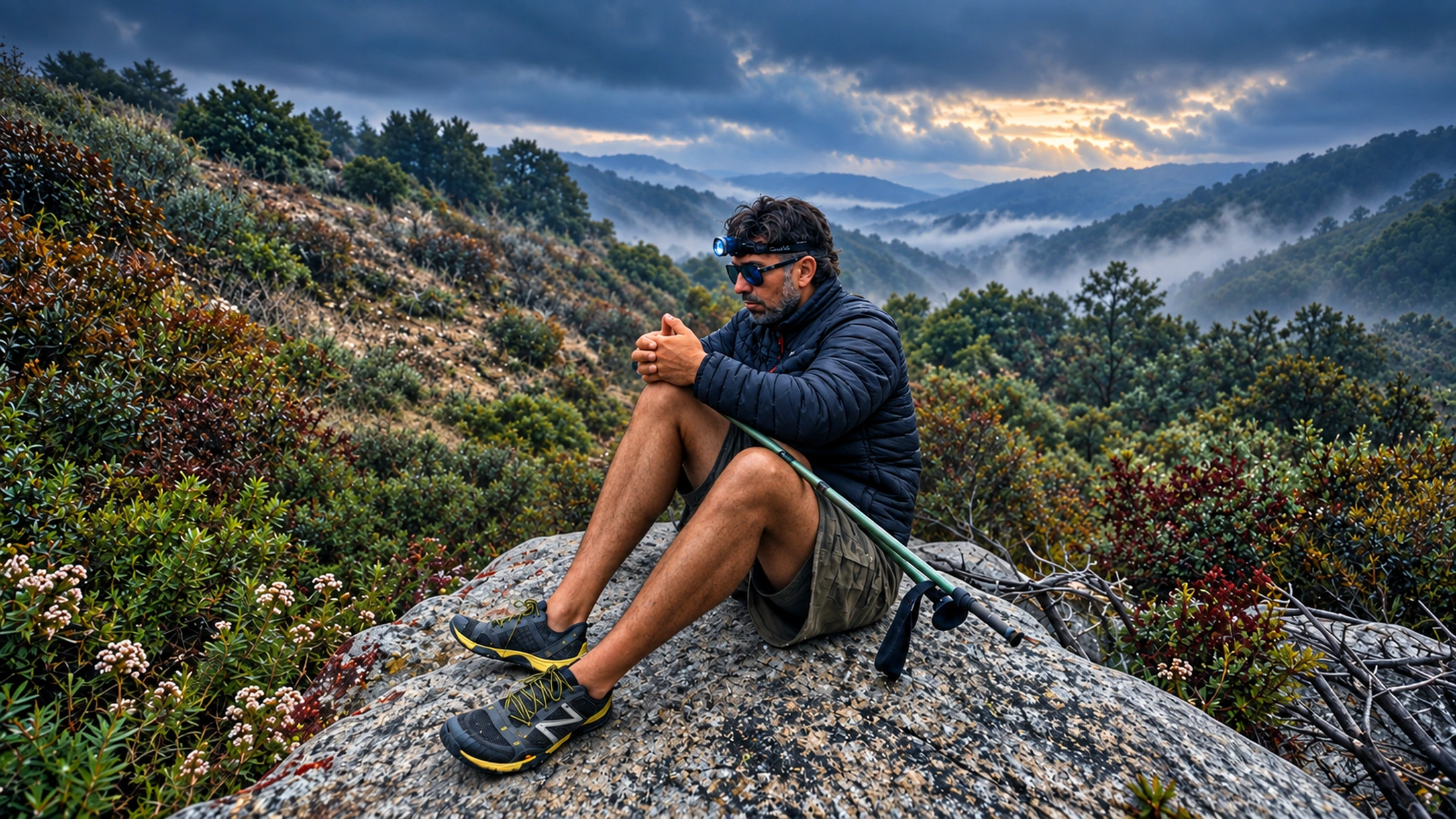
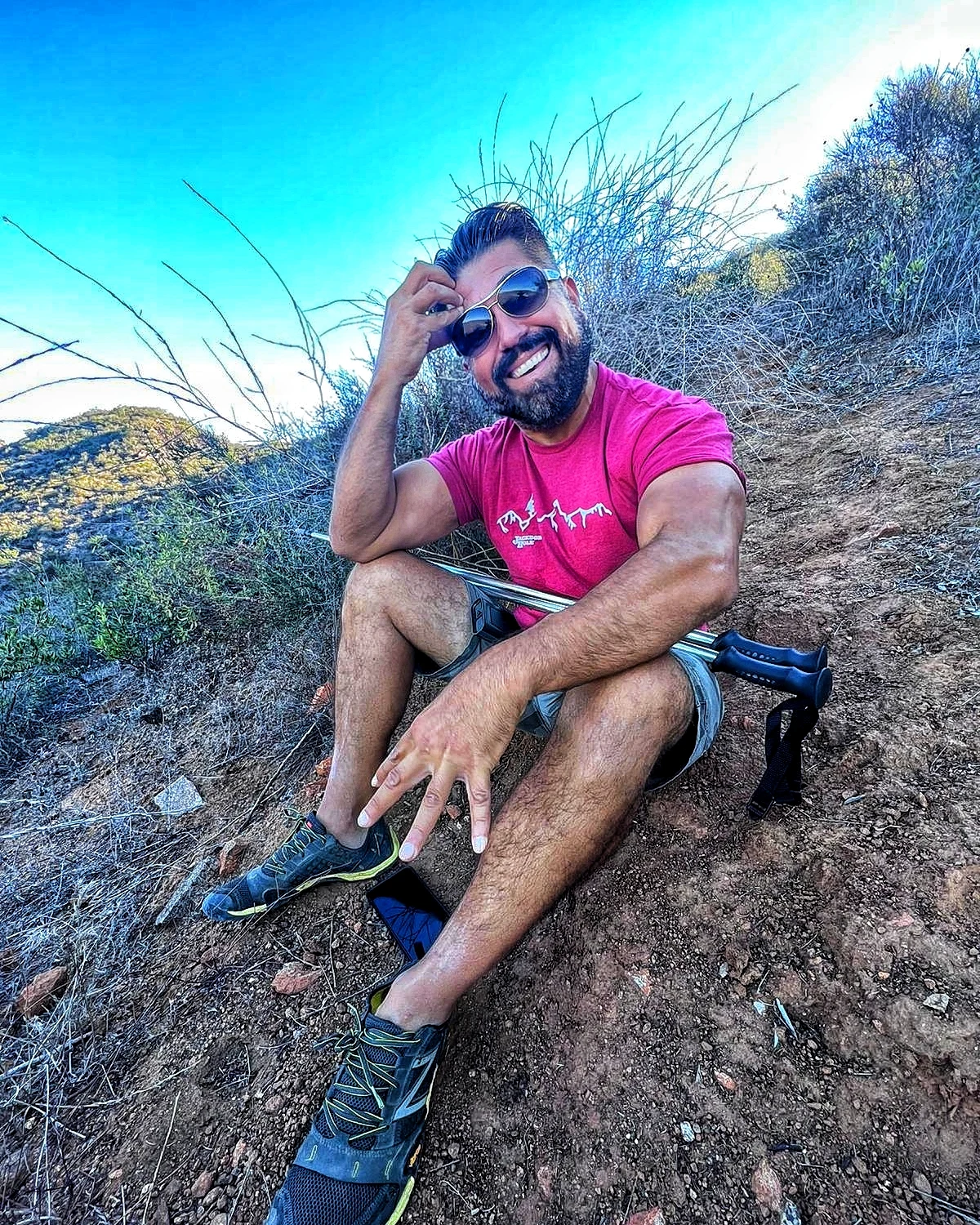
Back to dirt. Back to trails. Back to mountains. Not unchanged. Not finished. But moving.
ARCHIVE
[TBD — verified rehabilitation date range] [TBD — contemporaneous medical or rehabilitation records, private by default unless deliberately approved for publication] [TBD — period photographs showing the recovery years, labeled with actual dates where known] [TBD — journal entries, messages, training notes, or other contemporaneous records documenting changing capacity] [TBD — earliest verified return-to-hiking photographs or records] [TBD — later reflections clearly labeled as retrospective]
No image should be described as a rehabilitation milestone or first return unless its date and context can be verified. Medical information remains private by default and should be published only through a deliberate editorial decision.
THE LINE I CARRIED FORWARD
I used to measure strength by how far I could go. Recovery taught me to measure it by how many times I was willing to begin again.