PERIOD: EARLY / MID-2020s — EXACT START AND END YEARS STILL TO BE VERIFIED
OPENING
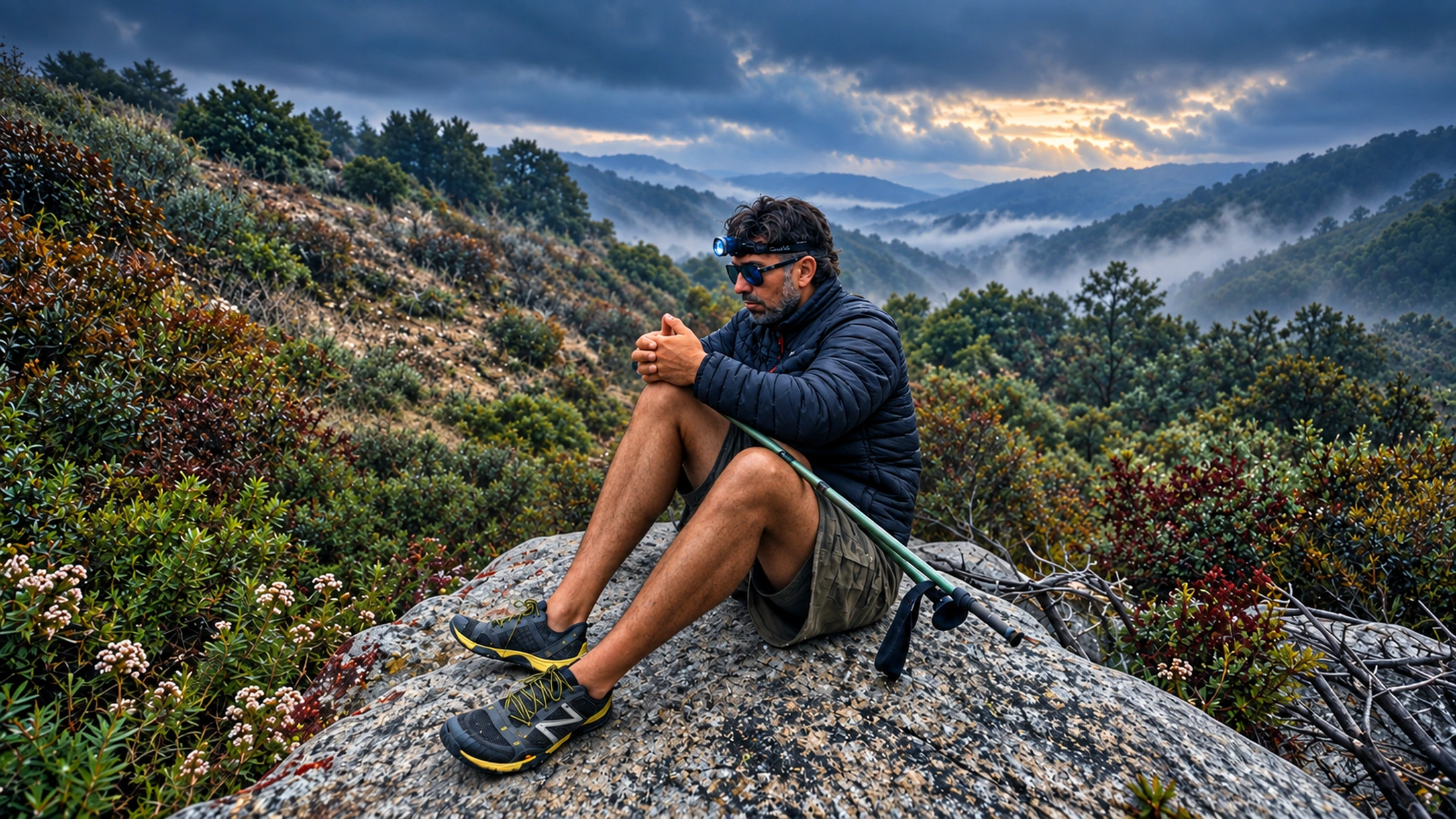
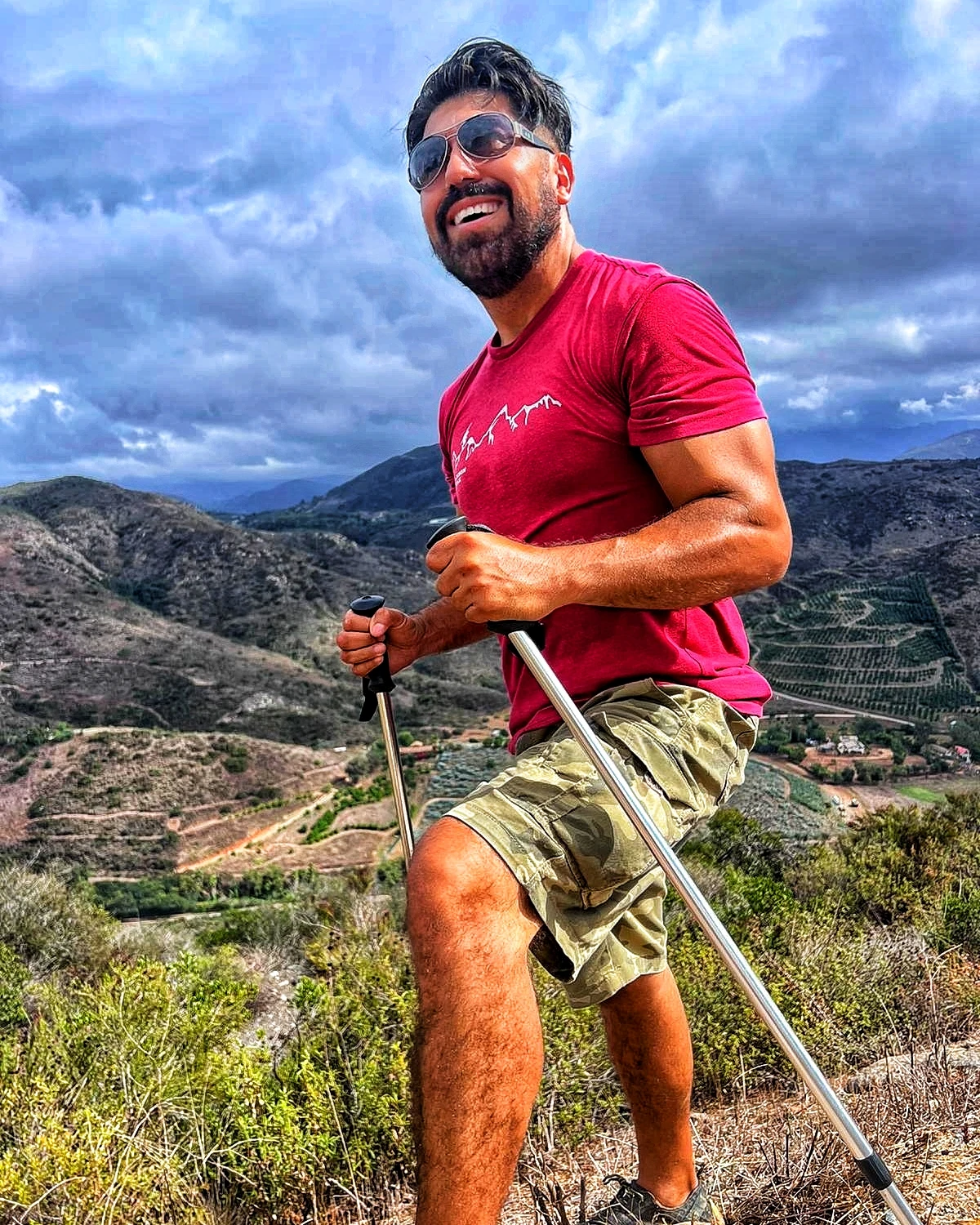
At some point, hiking stopped being only the place I went to clear my head. It became preparation for something much bigger. By then, the mountains were already part of my life. I had spent years returning to them. I had learned what repetition could do to a body. I had learned how movement could quiet a mind. I had learned that discipline could carry me farther than motivation ever would.
But eventually the scale changed. The goal had a name. Mount Everest. And once the goal became that large, ordinary preparation no longer felt ordinary. The question was no longer simply whether I could finish another hike. The question became whether I could build the endurance, judgment, patience, resilience, and humility required to move toward one of the largest objectives I had ever given myself.
That is when the mountains stopped being only where I went. They became where I trained.
NO PERFECT START DATE
I remember the serious Everest-preparation period as lasting nearly five years . The exact start and end dates are still TBD . I am not going to manufacture a cleaner timeline because a website looks better when every chapter has a precise year attached to it. The honest version is this: The training intensified across the early and middle part of the 2020s, building on a mountain life that had already been underway for years.
There was overlap. There were ordinary hikes that became training without announcing themselves as training. There were climbing days. Camping. Long-distance days. Loaded-pack days.
Rock climbing. Days when the mountain was the workout. Days when the mountain was the classroom. And days when it was both.
EVEREST CHANGED THE SCALE
Everest was never interesting to me because it was a famous word. A famous mountain is still a mountain. It still requires a body to move through real terrain. It still requires decisions. It still requires preparation. It still requires the ability to recognize when confidence has become something more dangerous.
The goal forced me to think differently about what training meant. A long hike could not simply be a long hike anymore. Distance mattered. Load mattered. Recovery mattered. Time outside mattered.
Climbing skill mattered. Judgment mattered. And perhaps most important, the ability to listen when the mountain was giving me information mattered.
The larger the objective became, the less room there was for pretending.
ALMOST EVERY DAY
During that period, I was in the mountains almost every day . That is how I remember it. Not once in a while. Not when the schedule happened to be convenient. The mountains became the schedule. Some days were shorter.
Some were long. I remember hiking days that ranged roughly from 10 miles to 40 miles . That range is part of my own recollection of the period. I am not presenting it as a reconstructed GPS archive, and I am not claiming every day looked the same. They did not. What mattered was accumulation. Miles on tired legs.
Elevation after elevation. Another morning when the body would have preferred something easier. Another day of learning whether yesterday's effort had actually been absorbed—or merely survived.
THE LOAD CHANGES THE WALK
I trained with a loaded pack. I am deliberately not publishing a specific historical pack weight here because the exact weight for this period has not yet been verified from training records. But anyone who has carried real weight over distance understands the difference. A pack changes the walk. It changes posture. Pace.
Balance. Breathing. How quickly small weaknesses reveal themselves. A mile under load is not the same mile without it. And the point was not to look rugged. The point was adaptation.
To teach the body that the work would not always arrive under ideal conditions.
MONTHS OUTSIDE
Across that era, I spent months in total camping in the mountains . The exact cumulative duration is still TBD . What matters to the story is that camping stopped feeling like an occasional escape. It became part of the preparation. You learn different things when you stay out. The trail does not end because the sun does.
Comfort becomes relative. Routine changes. Weather feels less like something viewed through a window and more like a condition you have to live inside. You learn what you actually need. You learn what you packed because you were afraid. You learn what you forgot because you were careless.
And you learn that the morning still arrives whether you slept well or not.
HIKING WAS NOT ENOUGH
The preparation expanded beyond hiking. I climbed. I rock climbed. I camped. I explored. I kept building endurance through long mountain days while trying to become more capable in environments where simple forward movement could require more attention.
I am intentionally not retroactively labeling every difficult outing as technical expedition training. Some days were hiking days. Some were climbing days. Some were simply hard days outside. The integrity of the story matters more than making every memory sound more extreme than it was. But taken together, those years formed a serious body of preparation directed toward an Everest attempt.
WHERE LIFE MAKES THE RULES
The title of this chapter comes from something the mountains kept teaching me. Out there, my opinion has limits. I can want the weather to improve. That does not make it improve. I can want more daylight. The sun still sets.
I can want the terrain to become easier. The terrain remains what it is. I can believe I have more strength left than I actually do. The body eventually tells the truth. The mountain does not need to humiliate me. It simply does not rearrange itself around me.
That is what I mean by where life makes the rules . There are environments where confidence can carry a person a long way. And there are environments where confidence without judgment can carry a person directly into trouble.
DISCIPLINE HAD TO BECOME JUDGMENT
Earlier in my mountain life, discipline had often meant showing up no matter what. I had already lived through a 400-day consecutive peak streak . That taught me how powerful repetition could be. But serious mountain preparation demanded another lesson: Showing up is not the same thing as making a good decision. Sometimes the stronger choice is continuing.
Sometimes it is slowing down. Sometimes it is changing the plan. Sometimes it is turning around. I had to understand that endurance was only one part of the equation. Preparation without judgment can become stubbornness. Ambition without humility can become blindness.
The mountains kept making that distinction clearer.
THE BODY KEEPS A DIFFERENT SCORE
Long-distance training reduced everything to signals. Breath. Legs. Feet. Heat. Cold.
Pain. Hydration. Fatigue. Attention. The difference between discomfort and warning. The difference between a difficult hour and a changed condition.
The body is not always eloquent. But it is usually saying something. The longer the day, the harder it becomes to fake what is happening. That honesty was part of the preparation too.
THE MENTAL MOUNTAIN
Everest preparation was never only physical for me. The physical work was obvious because it could be measured in miles, elevation, time, and fatigue. The mental work was quieter. Could I keep making decisions after hours of effort? Could I stay patient when the objective felt far away? Could I keep my ego from making decisions for me?
Could I accept uncertainty without becoming careless? Could I be alone with myself for long periods and remain clear? Those questions mattered. A mountain can exhaust the legs. It can also expose whatever the mind has been hiding.
THE SPIRITUAL MOUNTAIN
There was another layer too. Faith. The solitude I found in the mountains often became time with God. Prayer did not make the trail shorter. Faith did not remove the need to prepare. And preparation did not make faith unnecessary.
For me, they existed beside each other. Work honestly. Prepare seriously. Pay attention. Pray. Stay humble enough to understand that wanting something badly does not mean I am entitled to it.
That became part of the Everest preparation too.
WHEN I BELIEVED I WAS READY
By the later part of that preparation, I believed I had reached a place where I was ready to pursue Everest seriously. I felt ready mentally, physically, spiritually, and financially . That was my assessment at the time. It was not a guarantee. No amount of confidence makes a major mountain owe anyone safe passage. But inside me, the pieces felt aligned.
Years of movement. Years of mountain time. Long days. Loaded packs. Camping. Climbing.
Rock climbing. Discipline. Faith. A goal that had survived long enough to become more than fantasy. For the first time, Everest felt less like a distant idea and more like a direction I had actually been moving toward.
WHAT I WILL NOT INVENT
There are details from this period I still want to document more precisely. The exact day serious Everest preparation began. The exact end date. Historical pack weights. A complete list of routes. Exact camping totals.
Training logs. Technical progression records. Any period photographs that can be tied confidently to specific days. Those details should be added only when they can be supported honestly. Until then, TBD means TBD . A stronger story is not one with more numbers.
It is one where the numbers that appear can be defended.
BEFORE THE FALL
At that point, the plan was still alive. The preparation had direction. Everest remained ahead of me. I did not know that a later climb would change the trajectory of everything. It happened on a beautiful, high mountain whose public identity I am intentionally keeping private . Under harsh snow and ice conditions, the terrain became unforgiving.
What happened there belongs to the next chapter. I will not blame the mountain. I will not turn a place I consider beautiful into a villain because something terrible happened to me there. The mountain remains unnamed. The conditions, the fall, the injuries, and what followed can stand on their own.
WHAT IT CHANGED IN ME
Before this era, I understood endurance mostly as the ability to continue. These years complicated that definition. Endurance is continuing when continuing is right. Judgment is knowing when it is not. Humility is accepting that the world outside me has conditions I do not control. Preparation is respecting those conditions before they become consequences.
Those lessons would become painfully important soon enough.
LOOKING BACK
When I look back at the Everest-preparation years now, I do not see a montage of heroic training. I see repetition. Long walks. Heavy days. Camping. Climbing.
Rock. Fatigue. Silence. Prayer. Mistakes. Adjustment.
The slow accumulation of capability. I also see how much the goal organized my life. Everest gave the training a horizon. But the mountain years gave me something more useful than a distant summit. They taught me to pay attention to what was happening under my feet.
ARCHIVE
[TBD — period training photographs tied to verified dates] [TBD — hiking / climbing / rock-climbing photographs from the preparation years] [TBD — loaded-pack photographs with verified context] [TBD — camping photographs and dates] [TBD — route logs, journals, GPS records, or training notes] [TBD — gear records that can accurately establish the period]
Precise GPS coordinates, sensitive locations, and private training routes do not need to be published simply because records exist.
THE LINE I CARRIED FORWARD
I went into those years trying to prepare for Everest. The mountains were teaching me that ambition only matters after it learns to listen.